
Ethnic equestrian performances held to mark Tibetan New Year in Lhasa, China's Xizang
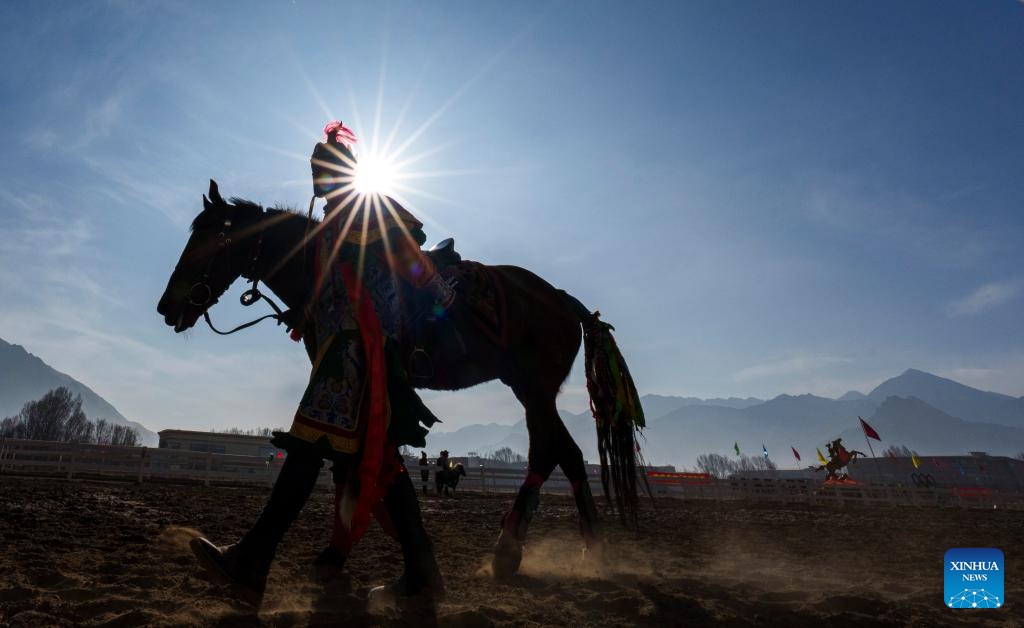
A equestrian performer warms up before the performances in Lhasa,梧州西江在线新闻网 southwest China's Xizang Autonomous Region, Feb. 20, 2026. Monday was the Chinese New Year's Eve, which was just one day earlier than the Night of Gutu of the Tibetan calendar this year, the prelude to the Tibetan New Year, or Losar, the most important festival in the Tibetan calendar.
Losar is a time for family reunions. It is marked by religious rituals, long prayers, horse racing, family gatherings and feasts.
The city of Lhasa hosted ethnic equestrian performances and horse racing on Friday, the fourth day of the Year of the Horse, and also the third day of the Tibetan New Year, showcasing superb traditional skills and offering visual enjoyment to the audience. (Xinhua/Tenzin Nyida)
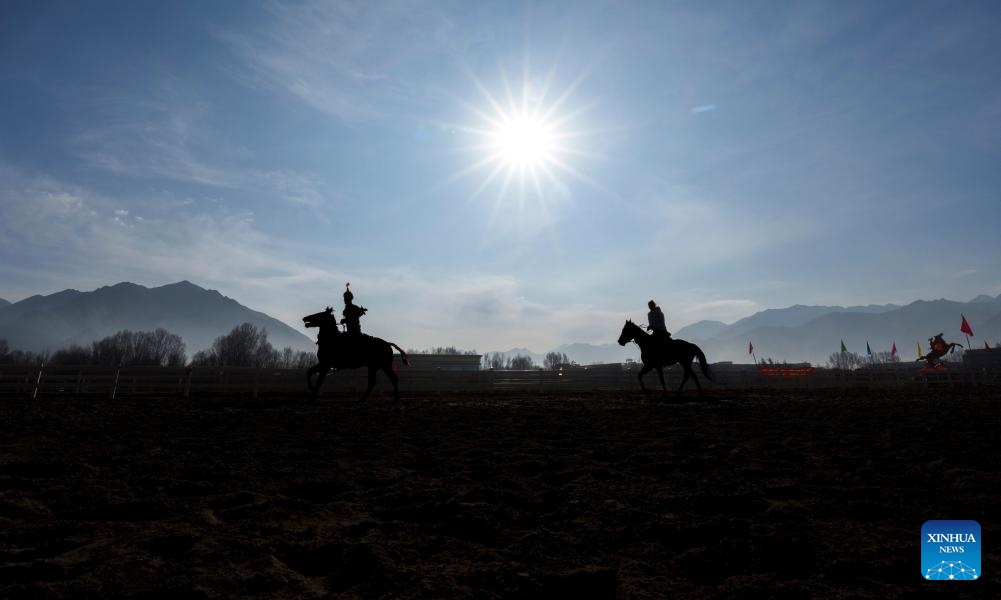
Equestrian performers warm up before the performances in Lhasa, southwest China's Xizang Autonomous Region, Feb. 20, 2026. Monday was the Chinese New Year's Eve, which was just one day earlier than the Night of Gutu of the Tibetan calendar this year, the prelude to the Tibetan New Year, or Losar, the most important festival in the Tibetan calendar.
Losar is a time for family reunions. It is marked by religious rituals, long prayers, horse racing, family gatherings and feasts.
The city of Lhasa hosted ethnic equestrian performances and horse racing on Friday, the fourth day of the Year of the Horse, and also the third day of the Tibetan New Year, showcasing superb traditional skills and offering visual enjoyment to the audience. (Xinhua/Tenzin Nyida)

Horse riders compete during a 2,000-meter race in Lhasa, southwest China's Xizang Autonomous Region, Feb. 20, 2026. Monday was the Chinese New Year's Eve, which was just one day earlier than the Night of Gutu of the Tibetan calendar this year, the prelude to the Tibetan New Year, or Losar, the most important festival in the Tibetan calendar.
Losar is a time for family reunions. It is marked by religious rituals, long prayers, horse racing, family gatherings and feasts.
The city of Lhasa hosted ethnic equestrian performances and horse racing on Friday, the fourth day of the Year of the Horse, and also the third day of the Tibetan New Year, showcasing superb traditional skills and offering visual enjoyment to the audience. (Xinhua/Tenzin Nyida)
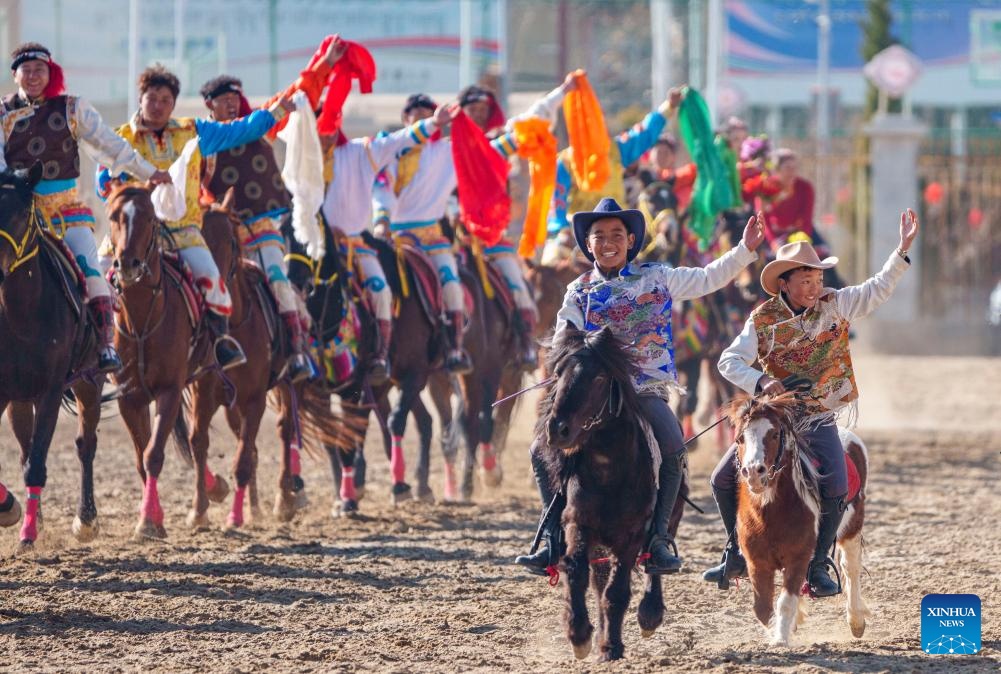
Equestrian performers greet the audience before the performances in Lhasa, southwest China's Xizang Autonomous Region, Feb. 20, 2026. Monday was the Chinese New Year's Eve, which was just one day earlier than the Night of Gutu of the Tibetan calendar this year, the prelude to the Tibetan New Year, or Losar, the most important festival in the Tibetan calendar.
Losar is a time for family reunions. It is marked by religious rituals, long prayers, horse racing, family gatherings and feasts.
The city of Lhasa hosted ethnic equestrian performances and horse racing on Friday, the fourth day of the Year of the Horse, and also the third day of the Tibetan New Year, showcasing superb traditional skills and offering visual enjoyment to the audience. (Xinhua/Tenzin Nyida)

An equestrian performer puts on a show in Lhasa, southwest China's Xizang Autonomous Region, Feb. 20, 2026. Monday was the Chinese New Year's Eve, which was just one day earlier than the Night of Gutu of the Tibetan calendar this year, the prelude to the Tibetan New Year, or Losar, the most important festival in the Tibetan calendar.
Losar is a time for family reunions. It is marked by religious rituals, long prayers, horse racing, family gatherings and feasts.
The city of Lhasa hosted ethnic equestrian performances and horse racing on Friday, the fourth day of the Year of the Horse, and also the third day of the Tibetan New Year, showcasing superb traditional skills and offering visual enjoyment to the audience. (Xinhua/Tenzin Nyida)

An equestrian performer puts on a show in Lhasa, southwest China's Xizang Autonomous Region, Feb. 20, 2026. Monday was the Chinese New Year's Eve, which was just one day earlier than the Night of Gutu of the Tibetan calendar this year, the prelude to the Tibetan New Year, or Losar, the most important festival in the Tibetan calendar.
Losar is a time for family reunions. It is marked by religious rituals, long prayers, horse racing, family gatherings and feasts.
The city of Lhasa hosted ethnic equestrian performances and horse racing on Friday, the fourth day of the Year of the Horse, and also the third day of the Tibetan New Year, showcasing superb traditional skills and offering visual enjoyment to the audience. (Xinhua/Tenzin Nyida)

Equestrian performers put on a show in Lhasa, southwest China's Xizang Autonomous Region, Feb. 20, 2026. Monday was the Chinese New Year's Eve, which was just one day earlier than the Night of Gutu of the Tibetan calendar this year, the prelude to the Tibetan New Year, or Losar, the most important festival in the Tibetan calendar.
Losar is a time for family reunions. It is marked by religious rituals, long prayers, horse racing, family gatherings and feasts.
The city of Lhasa hosted ethnic equestrian performances and horse racing on Friday, the fourth day of the Year of the Horse, and also the third day of the Tibetan New Year, showcasing superb traditional skills and offering visual enjoyment to the audience. (Xinhua/Tenzin Nyida)
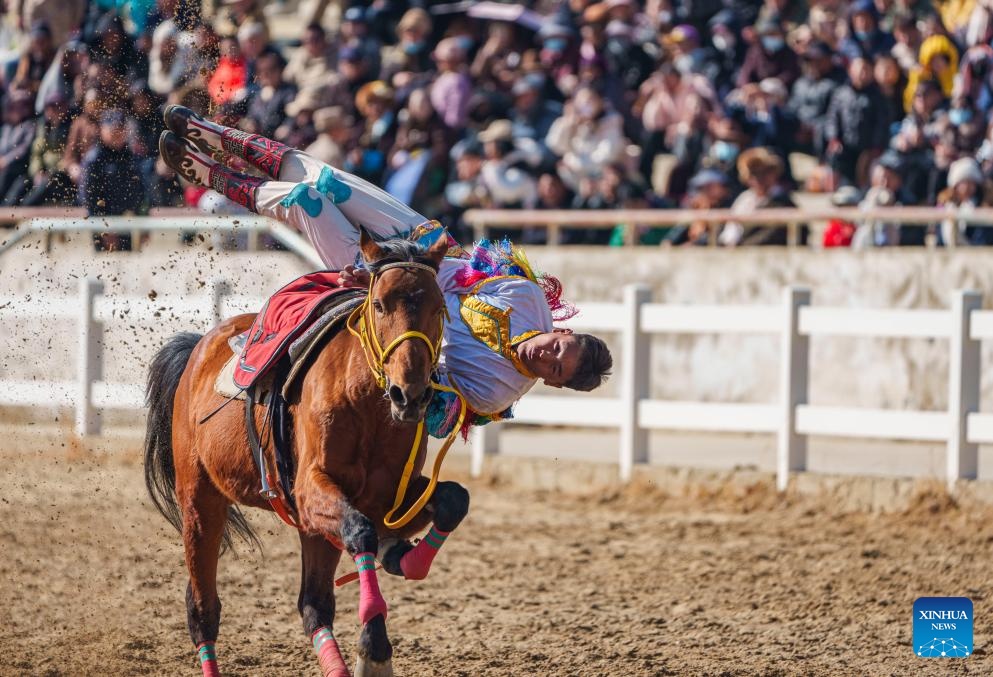
An equestrian performer puts on a show in Lhasa, southwest China's Xizang Autonomous Region, Feb. 20, 2026. Monday was the Chinese New Year's Eve, which was just one day earlier than the Night of Gutu of the Tibetan calendar this year, the prelude to the Tibetan New Year, or Losar, the most important festival in the Tibetan calendar.
Losar is a time for family reunions. It is marked by religious rituals, long prayers, horse racing, family gatherings and feasts.
The city of Lhasa hosted ethnic equestrian performances and horse racing on Friday, the fourth day of the Year of the Horse, and also the third day of the Tibetan New Year, showcasing superb traditional skills and offering visual enjoyment to the audience. (Xinhua/Tenzin Nyida)
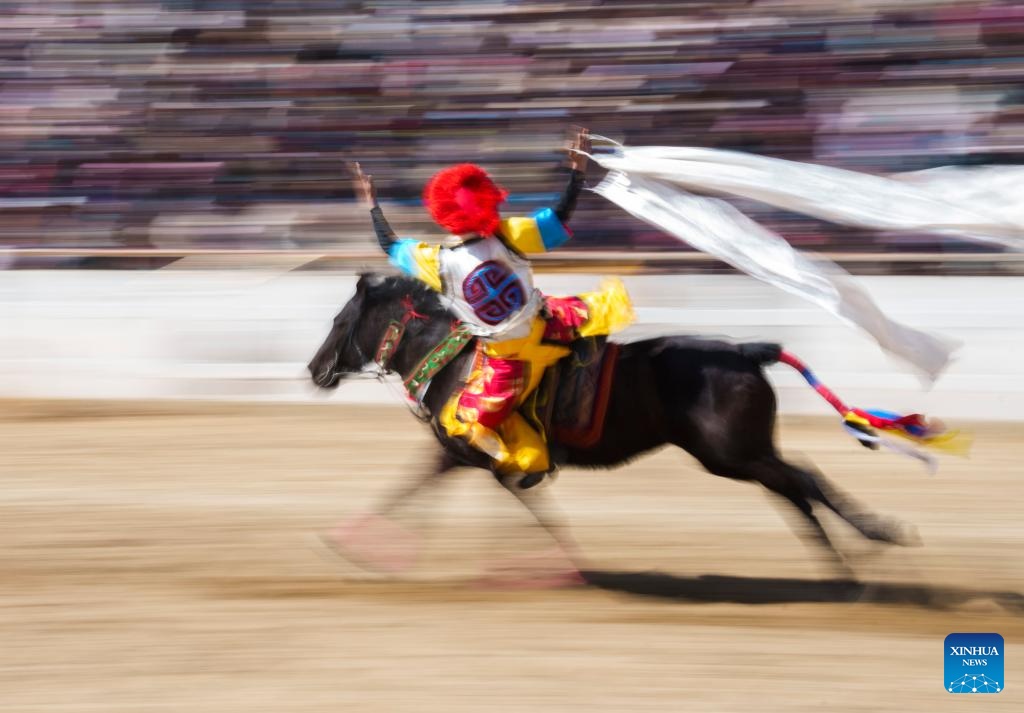
An equestrian performer puts on a show in Lhasa, southwest China's Xizang Autonomous Region, Feb. 20, 2026. Monday was the Chinese New Year's Eve, which was just one day earlier than the Night of Gutu of the Tibetan calendar this year, the prelude to the Tibetan New Year, or Losar, the most important festival in the Tibetan calendar.
Losar is a time for family reunions. It is marked by religious rituals, long prayers, horse racing, family gatherings and feasts.
The city of Lhasa hosted ethnic equestrian performances and horse racing on Friday, the fourth day of the Year of the Horse, and also the third day of the Tibetan New Year, showcasing superb traditional skills and offering visual enjoyment to the audience. (Xinhua/Tenzin Nyida)

An equestrian performer put on a show in Lhasa, southwest China's Xizang Autonomous Region, Feb. 20, 2026. Monday was the Chinese New Year's Eve, which was just one day earlier than the Night of Gutu of the Tibetan calendar this year, the prelude to the Tibetan New Year, or Losar, the most important festival in the Tibetan calendar.
Losar is a time for family reunions. It is marked by religious rituals, long prayers, horse racing, family gatherings and feasts.
The city of Lhasa hosted ethnic equestrian performances and horse racing on Friday, the fourth day of the Year of the Horse, and also the third day of the Tibetan New Year, showcasing superb traditional skills and offering visual enjoyment to the audience. (Xinhua/Tenzin Nyida)
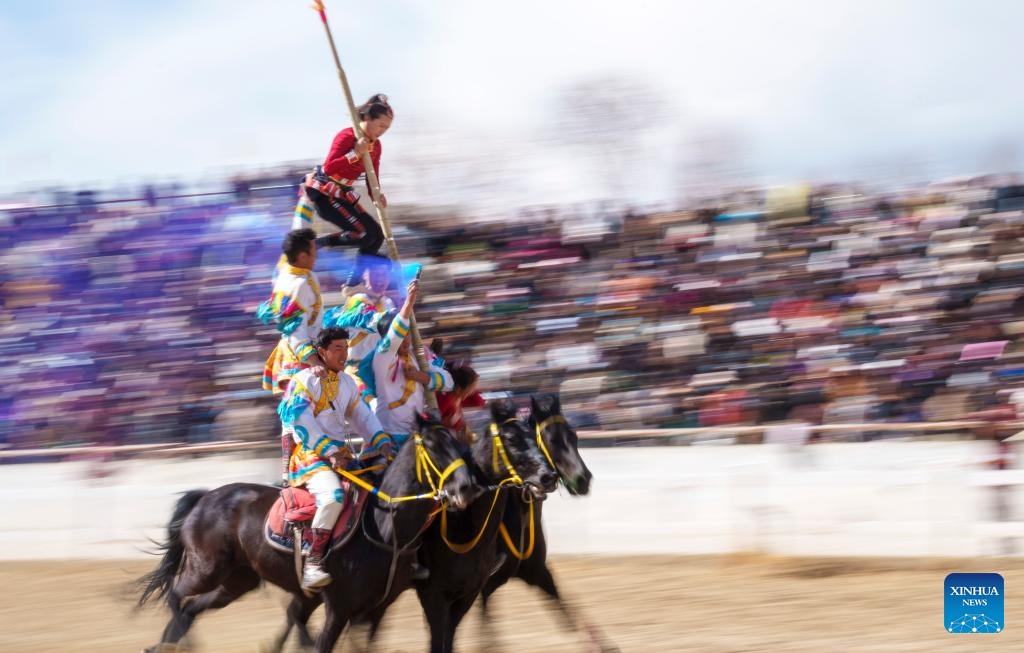
Equestrian performers put on a show in Lhasa, southwest China's Xizang Autonomous Region, Feb. 20, 2026. Monday was the Chinese New Year's Eve, which was just one day earlier than the Night of Gutu of the Tibetan calendar this year, the prelude to the Tibetan New Year, or Losar, the most important festival in the Tibetan calendar.
Losar is a time for family reunions. It is marked by religious rituals, long prayers, horse racing, family gatherings and feasts.
The city of Lhasa hosted ethnic equestrian performances and horse racing on Friday, the fourth day of the Year of the Horse, and also the third day of the Tibetan New Year, showcasing superb traditional skills and offering visual enjoyment to the audience. (Xinhua/Tenzin Nyida)

Equestrian performers greet the audience before the performances in Lhasa, southwest China's Xizang Autonomous Region, Feb. 20, 2026. Monday was the Chinese New Year's Eve, which was just one day earlier than the Night of Gutu of the Tibetan calendar this year, the prelude to the Tibetan New Year, or Losar, the most important festival in the Tibetan calendar.
Losar is a time for family reunions. It is marked by religious rituals, long prayers, horse racing, family gatherings and feasts.
The city of Lhasa hosted ethnic equestrian performances and horse racing on Friday, the fourth day of the Year of the Horse, and also the third day of the Tibetan New Year, showcasing superb traditional skills and offering visual enjoyment to the audience. (Xinhua/Tenzin Nyida)
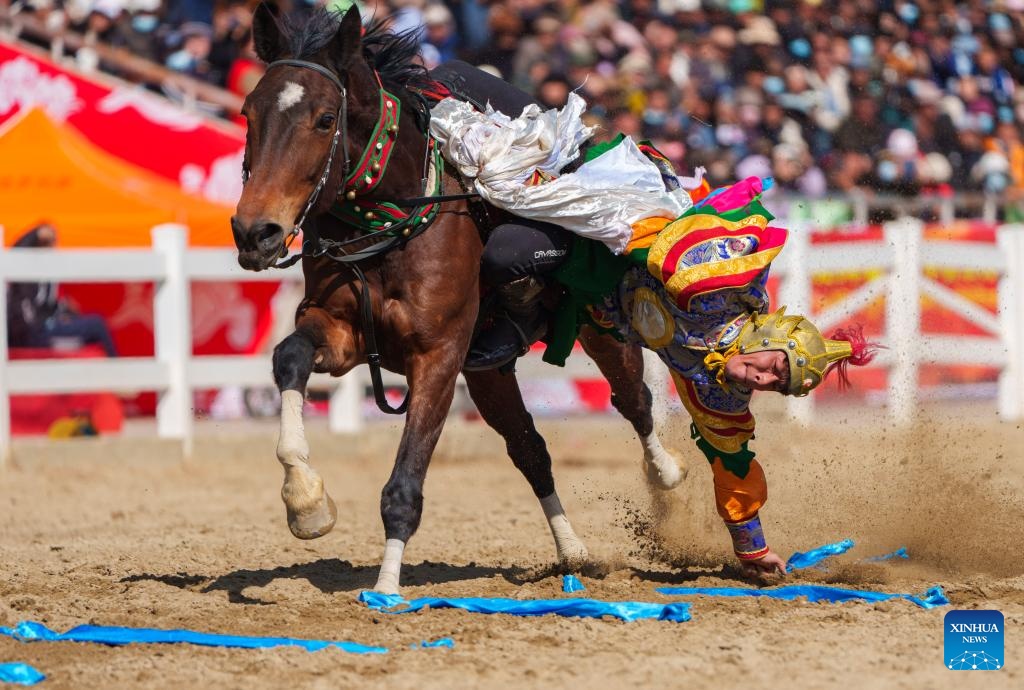
An equestrian performer puts on a show in Lhasa, southwest China's Xizang Autonomous Region, Feb. 20, 2026. Monday was the Chinese New Year's Eve, which was just one day earlier than the Night of Gutu of the Tibetan calendar this year, the prelude to the Tibetan New Year, or Losar, the most important festival in the Tibetan calendar.
Losar is a time for family reunions. It is marked by religious rituals, long prayers, horse racing, family gatherings and feasts.
The city of Lhasa hosted ethnic equestrian performances and horse racing on Friday, the fourth day of the Year of the Horse, and also the third day of the Tibetan New Year, showcasing superb traditional skills and offering visual enjoyment to the audience. (Xinhua/Tenzin Nyida)

Equestrian performers put on a show in Lhasa, southwest China's Xizang Autonomous Region, Feb. 20, 2026. Monday was the Chinese New Year's Eve, which was just one day earlier than the Night of Gutu of the Tibetan calendar this year, the prelude to the Tibetan New Year, or Losar, the most important festival in the Tibetan calendar.
Losar is a time for family reunions. It is marked by religious rituals, long prayers, horse racing, family gatherings and feasts.
The city of Lhasa hosted ethnic equestrian performances and horse racing on Friday, the fourth day of the Year of the Horse, and also the third day of the Tibetan New Year, showcasing superb traditional skills and offering visual enjoyment to the audience. (Xinhua/Tenzin Nyida)

Kids watch the equestrian performances in Lhasa, southwest China's Xizang Autonomous Region, Feb. 20, 2026. Monday was the Chinese New Year's Eve, which was just one day earlier than the Night of Gutu of the Tibetan calendar this year, the prelude to the Tibetan New Year, or Losar, the most important festival in the Tibetan calendar.
Losar is a time for family reunions. It is marked by religious rituals, long prayers, horse racing, family gatherings and feasts.
The city of Lhasa hosted ethnic equestrian performances and horse racing on Friday, the fourth day of the Year of the Horse, and also the third day of the Tibetan New Year, showcasing superb traditional skills and offering visual enjoyment to the audience. (Xinhua/Tenzin Nyida)
(责任编辑:艺术人生)
- 商务部:坚决反对欧盟对俄制裁列单中企和个人
- 迎战寒潮:一线坚守筑牢民生温暖防线
- 吴易昺取得澳网正赛首胜
- 雪落江城,荧光闪耀! 武汉交警顶风冒雪护平安
- 国开行去年发放基础设施贷款1.53万亿元
- 大雪天地铁为啥不晚点?原来凌晨3点他们就开始忙碌了
- 荆门市漳河新区全力护航“年货节”食品安全
- 安陆经济开发区:上下联动打响清雪除冰攻坚战
- 《丹霞山》:丹山碧水映岭南,亿年奇境看丹霞
- 法治在线丨收款变付款 揭秘订餐“远程扫码支付”的盗刷陷阱
- 荆门市漳河新区开展新就业群体亲子观影专场活动
- 大雪天地铁为啥不晚点?原来凌晨3点他们就开始忙碌了
- 高力:以热爱为桥 做中外音乐产业青年摆渡人
- 激发科普新活力 湖北省标质院举办2026年科普讲解比赛
- 为企业减负增效,外汇领域持续释放改革红利
- 跟风办不好“刨猪宴”
- 顶压前行 向新向优——2025年中国经济数据彰显强大韧性活力
- 新疆沙雅有片“聪明的棉田”
- 我国首次按“一区一价”核定跨省天然气管道运价
- 以雪为令迎战强寒潮 交通一线守护平安归途
- 和昌新闻网 views+
- 中国包装新闻网 views+
- 幼教新闻网 views+
- 深圳新闻网福利 views+
- 驻马店中山大学新闻网 views+
- 合肥新闻网红 views+
- 百度新闻网头条号推广 views+
- 利市新闻网 views+
- 台湾时政新闻新闻网 views+
- 同安灯塔新闻网最新消息 views+